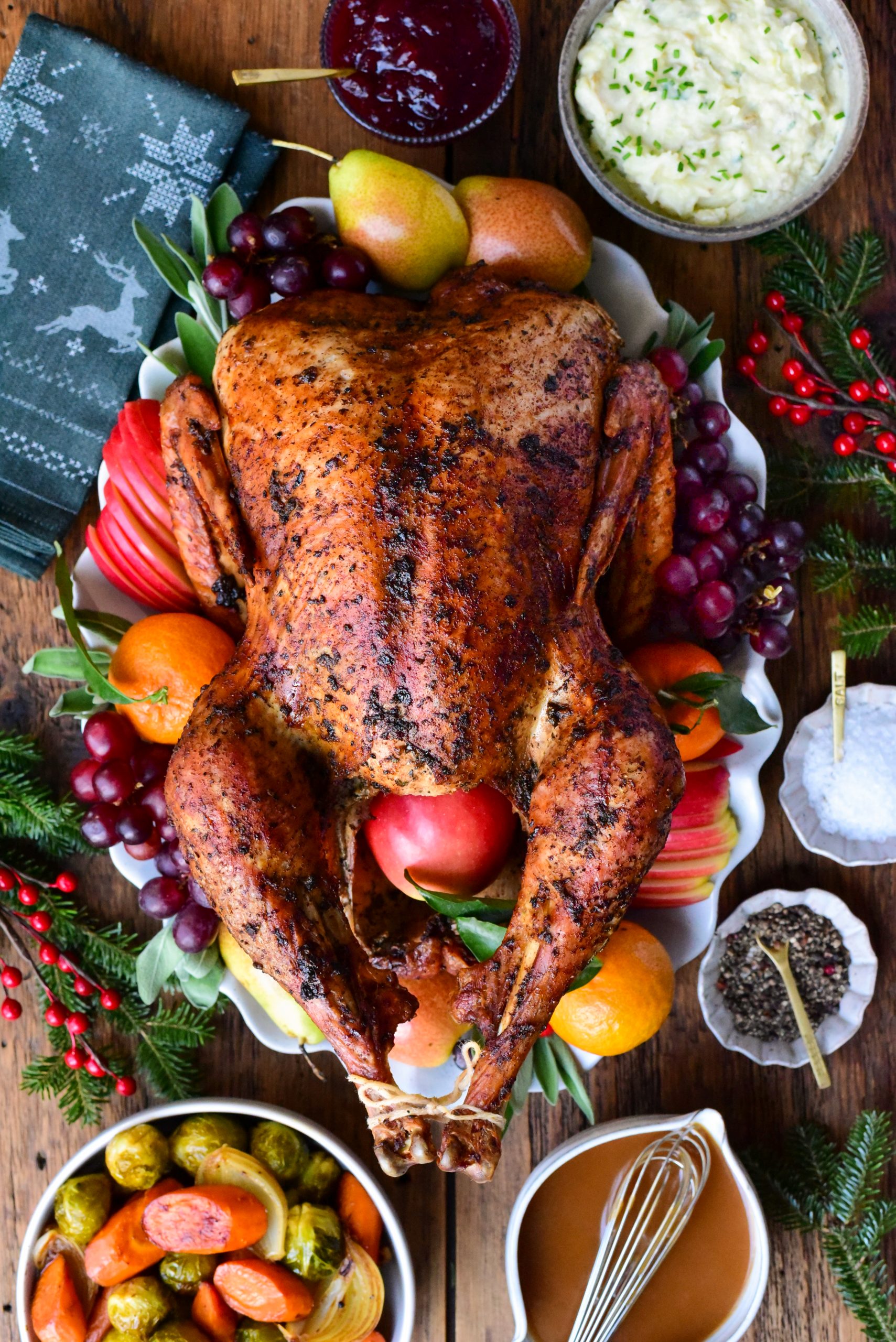
Garlic and Herb Turkey with Roasted Vegetables
Prep Time: 45 minutes
Cook Time: 3 to 4 hours (depending on turkey size)
Servings: 8–10
Butter-Oil Blend
- 1 cup unsalted butter
- 3 tbsp olive oil
- 4 garlic cloves, minced
- 1 tbsp fresh thyme, chopped
- 1 tbsp fresh sage, chopped
- 1 tbsp fresh parsley, chopped
- 1 tbsp paprika
- 1.5 tsp smoked paprika
- 2 tsp salt
- 1 tsp black pepper
Turkey and Vegetables
- 1 turkey (14–16 pounds)
- 1.5 pounds carrots, cut into 1.5–2 cm pieces
- 1.25 pounds Brussels sprouts, halved
- 2 medium onions, cut into wedges
- 2 tbsp olive oil
- Salt and pepper, to taste
- 1 cup chicken broth or water
Before You Start
- Thaw and Prep the Turkey
- Thaw the turkey in the fridge for 3–4 days.
- Once thawed, remove packaging, neck, giblets, and any loose fat.
- Pat the turkey dry thoroughly.
- Position the Legs
- Twist the legs slightly outward to expose the joints; do not tie.
- Optional,Overnight Drying
- The night before the cook, place the turkey on a sheet pan with a rack, uncovered, in the fridge overnight for extra dry skin.
- Bring to Room Temperature
- On roasting day, let the turkey sit at room temperature for 30–45 minutes, while preparing the butter mixture and preheating the oven.
Preheat and Prepare Butter-Oil Mixture
Preheat oven to 425°F. Gently melt the butter, whisk in olive oil, then stir in garlic, herbs, paprika, salt, and pepper.
Loosen the Skin and Add Butter
Step 1: Loosen the Skin. Gently slide your fingers between the skin and the breast meat, starting at the neck or cavity opening. Work slowly to avoid tearing the skin. Carefully lift the skin, creating pockets over the breasts and thighs.
Step 2: Spread Butter Under the Skin. Use a spoon or your fingers to spread some of the butter-oil-herb mixture under the loosened skin. This helps the meat stay moist and adds flavour directly to the turkey.
Step 3: Brush the Exterior. Smooth the skin back over the meat. Brush the remaining butter mixture all over the outside of the bird, focusing on thighs, legs, and wings for even coverage.
Tip: Be gentle, keep the skin attached at the edges.
Start Roasting on the Side
Place the turkey on its left side on a rack in a roasting pan. Roast for 15 minutes at 425°F.
Why This Helps: These short side-roast stages let the thighs and legs begin cooking evenly without the breast overcooking.
NOTE: If flipping feels like too much for your first holiday roast, it is perfectly fine to keep the turkey breast-up the whole time. You will still get a delicious result.
Roast on the Other Side
Flip the turkey to its right side and roast for another 15 minutes at 425°F.
Tip: Use oven mitts and a second set of hands if possible. Slide a large spoon or tongs into the turkey cavity to lift and gently roll the turkey when turning. If it sticks to the rack, use tongs or a spatula to loosen it first.
Finish Breast-Up at Lower Temperature
Reduce oven to 325°F. Turn the turkey breast-side up and pour 1 cup of broth or water into the pan. Tie the legs with butcher’s twine and insert a probe thermometer into the thickest part of the thigh. Roast until the breast reaches 165°F and the thighs reach 175–180°F.
Rest the Turkey
Remove the turkey from the oven and transfer it to a sheet pan. Loosely tent the thighs with foil and leave the breast uncovered. Rest 30–45 minutes; ensure internal temperature stays above 60°C / 140°F while resting
Prepare the Vegetables
Pour off excess liquid from the roasting pan, leaving a thin layer of drippings. Deglaze with a splash of stock if needed. Toss carrots, Brussels sprouts, and onions with 2 tbsp olive oil or reserved turkey fat, salt, and pepper.
Roast the Vegetables
Spread vegetables in a single layer in the roasting pan. Roast at 425°F until tender and caramelized, about 30–40 minutes, tossing halfway through.
Carve and Serve Suggestions
Carve the turkey and serve with the roasted vegetables for a classic holiday meal. Serve with mashed potatoes, cranberry sauce, stuffing and homemade gravy for a classic holiday plate.
Pair with a crisp white wine or a light-bodied red like Pinot Noir. Leftovers work well in sandwiches, soups, or Upside Down Puff Pastry Tarts with Turkey Leftovers
Recipe courtesy of James Synowicki / Zimmy’s Nook